Deep Tissue Massage Benefits for Desk Workers and Drivers
Sitting is the common thread. A desk worker sits eight hours with the head forward and the shoulders rounded. A driver crossing the George Washington Bridge sits with one arm raised to the wheel and the right foot working the pedals. Both end the day with the same set of tight muscles, and both are the people who ask us most often what deep tissue massage actually does.
The direct answer: deep tissue massage uses slow, firm pressure to reach the deeper layers of muscle and the fascia around them, which is where sitting tension lives. Studies suggest it reduces pain and stiffness in the neck, shoulders and lower back in the short term, improves how far you can move, and lowers stress markers. Many people find the relief lasts days, and regular sessions keep it from building back up. This guide covers the benefits, the session, the soreness afterward, who should ask a doctor first and how often to book at our Palisades Park massage spa.
The short answer: it reaches the muscles sitting tightens
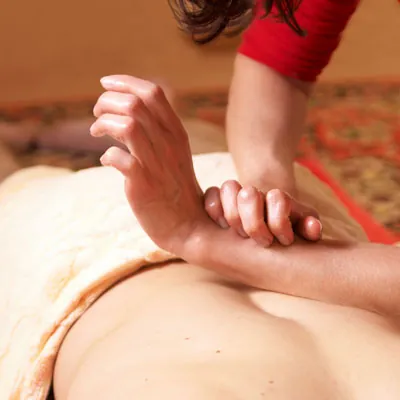
Deep tissue massage works the layers a lighter massage cannot. Slow strokes with the thumbs, knuckles, forearms and elbows sink through the surface muscle into the deeper tissue and the fascia, the connective sheet that wraps every muscle. Hours of sitting shorten and stiffen those deep layers, and no amount of light rubbing on the surface changes that.
For desk workers that means the upper trapezius, the levator scapulae at the side of the neck, the small muscles between the shoulder blades, the hip flexors and the glutes. For drivers it means the same list plus the right shoulder and forearm, the lower back and the calves. The benefit is simple: tissue that has been held short gets lengthened and softened, and the ache that comes with it eases.
If you want the full comparison with the lighter style, read our guide to Swedish versus deep tissue massage. The short version is that Swedish relaxes you and deep tissue fixes a specific problem.
What deep tissue massage is
Deep tissue is an oil based massage done with firm, slow pressure, usually along the grain of the muscle and sometimes across it. The therapist warms the area with lighter strokes first, then works deeper as the tissue lets them in. Speed is the key difference from a hard Swedish massage: deep tissue is slow, because tissue only releases when the pressure is held long enough.
The techniques
- Stripping: a slow stroke along the full length of a muscle with the thumb, knuckle or forearm.
- Friction: small movements across the fibers of a stubborn knot.
- Sustained pressure: a thumb or elbow held on one spot for 20 to 30 seconds until the tissue softens.
- Stretching: moving the limb while the muscle is pressed, to lengthen it.
Pressure is firm, but deep tissue should never be brutal. The right pressure feels like a good ache that eases as the therapist holds it. Sharp pain means too much, and you should say so. Our page on deep tissue massage in Bergen County covers the draping and the pressure scale in more detail.
What happens during a session
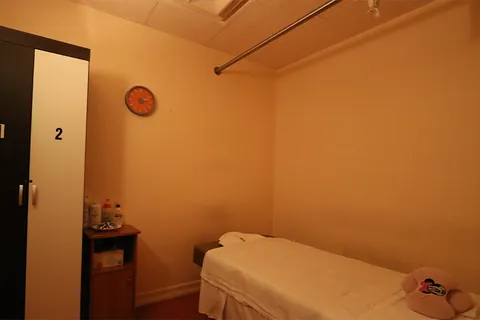
A deep tissue session at Hana Spa is in a private treatment room on a padded table with fresh linens. It follows a set order.
- A short conversation, about 2 minutes. The therapist asks about sore spots, injuries, surgeries, pregnancy and the pressure you want. Say whether you sit at a desk or drive, and which side hurts.
- You undress to your comfort level and lie face down under a sheet. Draping covers everything except the area being worked.
- Warm up strokes with oil on the back, 5 minutes or so, to prepare the tissue.
- Deep work on the priority areas you named, usually the neck, shoulders and lower back, then the glutes and hips, then the legs.
- Face up for the neck, chest, hip flexors and arms.
- A few minutes to rest, then water. You dress at your own pace.
You are in control of the pressure throughout. Korean and English are spoken, so saying lighter or deeper is easy.
The physical benefits
The physical benefits are the best supported. Reviews of massage for lower back pain and neck pain generally find a short term reduction in pain and an improvement in function, and deep tissue is the style most often used in those studies. Here is what that means for the two groups this guide is about.
| Problem from sitting | Muscles involved | What deep tissue does |
|---|---|---|
| Neck ache and tension headache | Upper trapezius, levator scapulae, suboccipitals | Lengthens the muscles holding the head forward; many people find headaches ease |
| Rounded shoulders | Pectorals, front of the shoulder | Releases the chest so the shoulders can sit back |
| Pain between the shoulder blades | Rhomboids, middle trapezius | Works out the knots from holding the arms forward at a keyboard or wheel |
| Lower back ache | Erector spinae, quadratus lumborum | Softens the muscles that brace the spine during long sits |
| Tight hips and glutes | Hip flexors, gluteus maximus, piriformis | Lengthens shortened hip flexors and releases glutes that go dormant in a chair |
| Stiff right shoulder and forearm (drivers) | Deltoid, forearm extensors | Releases the grip and the raised arm position from the wheel |
| Tight calves and ankles (drivers) | Gastrocnemius, soleus, tibialis anterior | Works the pedal foot that flexes thousands of times a trip |
Mobility and posture
Loosening the chest and the hip flexors is the quickest way most people regain the ability to stand up straight without effort. Deep tissue does not fix posture on its own, since the habit of sitting comes back the next morning, but it resets the tissue so that stretching and moving during the day work better.
Recovery and blood flow
Pressure moves fluid through the tissue and brings fresh blood in behind it. Whether it also flushes out toxins is a separate question, which our guide to what massage actually releases answers. Some studies suggest massage lowers blood pressure and heart rate for a short time after a session; the effect is modest and temporary, and it is not a treatment for high blood pressure. If you have a heart condition, ask your doctor before booking.
The mental benefits
Firm, slow pressure has a calming effect that lighter touch often does not. Many people find deep tissue puts them into a quieter state than a Swedish massage, because the intensity gives the mind one thing to focus on. Studies suggest massage lowers cortisol and reported anxiety and improves sleep on the night of the session.
For commuters the practical benefit is the transition. A session after the bridge and before home turns the drive into a thing that happened earlier rather than a thing still sitting in your shoulders. Pairing it with a few minutes in the steam sauna beforehand deepens the effect for people who like heat.
Deep tissue for desk workers and drivers
The desk pattern is forward head, rounded shoulders, a flattened lower back and shortened hip flexors. Tell the therapist you sit at a computer and they will plan around it.
Where the time goes for desk workers
Most of the session goes to the neck, the tops of the shoulders and the area between the shoulder blades, because that is where keyboard and screen tension collects. The second priority is the front of the hips, worked face up with the knee bent, because tight hip flexors pull the lower back into an ache that feels like a back problem but starts at the hip. If your back pain comes with a sciatica diagnosis, see what deep tissue can do for sciatica.
What to do between sessions
Stand up every 30 to 45 minutes. Move the screen to eye level. Stretch the chest in a doorway for 30 seconds a few times a day. None of this replaces the massage, but it makes the gains last longer than a week. Many desk workers also find that a session every 2 to 4 weeks keeps the headaches that start at the base of the skull from building up, which is the complaint we hear most from people working in Fort Lee and Edgewater offices.
The driver pattern
Drivers add two things to the desk pattern: an uneven load, since one arm and one foot do most of the work, and vibration through the seat for the length of the trip. Rideshare and delivery drivers from Fort Lee and Edgewater, long haul drivers coming off Route 46 and anyone with a daily bridge commute share the same complaints.
Where the time goes for drivers
The right shoulder and the forearm get worked first, then the lower back, which takes the vibration and the braced posture of stop and go traffic. The calves and the front of the shin on the pedal foot get thumb work that most people have never had before and notice immediately. The neck is last, since checking mirrors all day keeps it turning.
Timing the session
Come after the drive, not before. Sitting in traffic right after a deep tissue session undoes some of the work, and driving with freshly loosened muscles can feel odd for the first few minutes. A session in the evening with a short drive home, and rest after, is the right order. If you drive for a living and your shifts run late, the 11 PM closing time is the point: a session at 9 or 10 PM after the last fare, then a short drive home, is a rhythm many local drivers keep.
What to expect after, and the risks
Expect to feel loose and a little tired right after, and mildly sore the next day, especially the first few times. The soreness is like the day after a workout and usually clears within 24 to 48 hours. Drink water, move gently, and skip the gym that evening. Our guide to being sore after a deep tissue massage explains what is normal and what is not.
Who should not get deep tissue, or should ask a doctor first
- Anyone who is pregnant. Ask your doctor; a lighter Swedish massage is usually the better choice.
- Anyone on blood thinners or with a bleeding disorder, since deep pressure can bruise.
- Anyone with a blood clot, recent surgery, a fracture, osteoporosis or an open wound.
- Anyone with a skin infection or a fever, who should wait until well.
- Anyone with a heart condition, cancer, or diabetes with nerve damage, until a doctor says it is fine.
Deep tissue is also not for a fresh injury. In the first days after a strain or a fall, swelling is still active and firm pressure makes it worse. Wait for the acute phase to pass, or ask your doctor.
How often to book, by goal
Frequency depends on what you are trying to do. These are common patterns, not rules, and the therapist can adjust after seeing how your tissue responds.
| Goal | Common rhythm | For how long |
|---|---|---|
| Work out a specific stubborn knot or ache | Once a week | 3 to 4 weeks, then reassess |
| Maintenance for a desk job or daily commute | Every 2 to 4 weeks | Ongoing |
| Recovery from a training block | Every 1 to 2 weeks during the block | While training is heavy |
| Occasional reset | As needed | Whenever the tension builds |
Most commuters settle at every 2 to 4 weeks. Weekly is sensible while a specific problem is being worked out, then the gap can widen as the tension stops rebuilding as fast. For other styles, see how often to get a massage by goal.
Deep tissue massage at Hana Spa in Palisades Park
Hana Spa is at 520 Bergen Blvd in Palisades Park, NJ, six minutes from Fort Lee and the George Washington Bridge, with free parking on site. We are open every day from 9 AM to 11 PM. Walk ins are welcome, and you can call 201-242-0444 to hold a time. Korean and English are spoken.
Tell us you sit or drive all day and we will plan the session around it. Deep tissue is one of 14 services at our Palisades Park massage spa, each done by a licensed therapist in a private treatment room. Call for pricing.
Questions readers ask
Can I go back to the gym the same day as a deep tissue massage?
Better to wait until the next day. The tissue has been worked hard and needs rest and water. Light walking that evening is fine; a heavy lift or a long run is not.
Does deep tissue massage help tension headaches from screen work?
Many people find it does. The headache usually starts in the neck and the base of the skull, and deep work on the upper trapezius and suboccipital muscles often eases it. If headaches are frequent or severe, see a doctor first.
Is deep tissue massage safe if I have high blood pressure?
Ask your doctor. Massage lowers blood pressure a little for a short time, and for most people with controlled blood pressure it is fine, but your doctor should say so and the therapist should know.
Will deep tissue leave bruises?
It should not. Mild soreness is normal; visible bruising means the pressure was too deep or you bruise easily. Tell the therapist to go lighter, and mention any blood thinners before the session.