Does Massage Help Sciatica? What Deep Tissue Can and Cannot Do
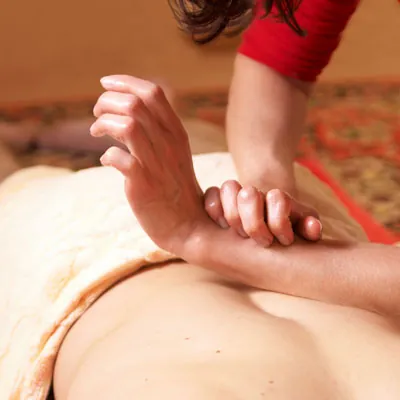
Sciatica is the shooting, burning or tingling pain that starts in the lower back or buttock and runs down the back of one leg. It comes from irritation of the sciatic nerve, the longest nerve in the body. People ask us almost every week whether a massage will help it, usually after a long drive over the George Washington Bridge or a week at a desk made it worse.
The direct answer: massage often helps the muscle part of sciatica and does nothing for the structural part. When tight glutes, hips and lower back muscles are squeezing or pulling on the nerve, deep tissue work can ease that and reduce the pain for hours or days. When the cause is a herniated disc, a narrowed spinal canal or a bone problem, massage can make you more comfortable but cannot fix it. This guide explains the difference, what a session at our Palisades Park massage spa looks like for sciatica, and when to see a doctor before you book.
The short answer: it helps the muscles, not the nerve
The sciatic nerve passes through and under several big muscles on its way from the spine to the foot: the deep rotators of the hip, including the piriformis, the gluteus maximus, and then the hamstrings. When those muscles are tight they can press on the nerve or hold the pelvis in a position that irritates it. Massage loosens them. For many people that is enough to take the edge off the pain, improve how far they can bend, and make sitting and driving tolerable again.
What massage cannot do is move a disc back into place, widen a spinal canal, or heal an irritated nerve directly. Studies suggest massage reduces lower back pain and improves function in the short term for many people, and the research on sciatica specifically is thinner but points the same way. Think of it as relief and maintenance, not a cure.
Understanding the sciatic nerve and what sciatica is
The sciatic nerve forms from nerve roots in the lower spine, runs through the buttock, down the back of the thigh, and splits behind the knee into branches that reach the calf and foot. Sciatica is not a diagnosis by itself. It is a symptom, and it has a cause somewhere along that path.
The common causes
- A herniated or bulging disc in the lower back pressing on a nerve root. This is the most common cause in adults under 60.
- Spinal stenosis, a narrowing of the canal the nerves pass through, more common after 60.
- Piriformis syndrome, where the piriformis muscle deep in the buttock tightens and squeezes the nerve. This is the cause massage helps most.
- A slipped vertebra, a bone spur, or less often an injury or growth.
- Pregnancy, where the weight and position of the baby put pressure on the nerve.
You usually cannot tell which cause you have from the pain alone. A disc and a tight piriformis can feel the same. That is why the first step is a doctor, not a massage table.
See a doctor first, especially with these signs
Get a diagnosis before you treat sciatica with massage. A doctor or physical therapist can tell you whether the cause is muscular, in which case massage is a sensible part of the plan, or structural, in which case massage is comfort care while something else does the main work. If you are pregnant, ask your doctor before any massage.
Some signs mean you should see a doctor right away rather than book a session.
- Loss of bladder or bowel control, or numbness in the groin or inner thighs. This is an emergency.
- Sudden weakness in the leg or foot, such as a foot that drags or will not lift.
- Pain after a fall, a car accident or another injury.
- Sciatica on both sides at once.
- Fever, unexplained weight loss or a history of cancer alongside the pain.
- Pain that has lasted more than 6 weeks without improving, or keeps getting worse.
None of these are things a massage therapist can treat, and firm pressure could make some of them worse. Everyone else, with a diagnosis in hand, can usually book with confidence.
What deep tissue massage can do for sciatica
Deep tissue work targets the specific muscles around the nerve. The therapist does not press on the nerve itself and does not work directly over a painful spine. The focus is the tissue around it.
| Area worked | Why it matters for sciatica | How the therapist works it |
|---|---|---|
| Gluteus maximus | Large muscle over the nerve; tightens from sitting | Broad, slow kneading with the palm and forearm |
| Piriformis and deep hip rotators | Sit directly on or next to the nerve | Slow, sustained pressure with the thumb or elbow, held 20 to 30 seconds |
| Lower back muscles beside the spine | Hold the pelvis in a tilted position | Stripping strokes along the muscle, never on the bone |
| Hamstrings | Nerve runs underneath; tight hamstrings pull on the pelvis | Long strokes down the thigh, then focused work on tight bands |
| Calf | Nerve branches pass through; often cramps with sciatica | Thumb work along the calf and into the arch |
| Hip flexors at the front | Tight from sitting; pull the lower back into an arch | Gentle pressure with the knee bent, face up |
Many people notice the leg pain ease during the session, and relief that lasts a day or several days afterward. The muscles that were squeezing the nerve are longer and softer, so the nerve has more room. Our deep tissue massage page describes the pressure and the draping in detail.
Some soreness the next day is normal after deep work on the glutes. If you want to know what is normal and what is not, read our guide to being sore after a deep tissue massage.
What massage cannot do, and what to avoid
Massage cannot repair a disc, shrink a bone spur or open a narrowed canal. If your pain is coming from one of those, massage is still worth having for comfort, but physical therapy, medication, injections or in some cases surgery do the real work, and your doctor decides which.
A few things to avoid during a sciatica flare:
- Very deep pressure directly on the sharpest point of pain. More pressure on an irritated nerve is not better. Tell the therapist exactly where it shoots and they will work around it.
- Strong stretching of the leg while the nerve is inflamed. Thai massage is excellent for stiff hips in general, but during an acute flare the assisted stretches can aggravate the nerve. Wait until the sharp pain settles.
- Lying flat on your stomach if it increases the pain. The therapist can place a pillow under your hips or work you on your side.
- Heat on a fresh injury. Hot stones feel good on a tight, chronic back but are not for the first days after a new flare.
A skilled therapist will ask about all of this in the conversation at the start of the session. Answer honestly, including how long the pain has lasted and what the doctor said.
Which massage styles suit sciatica
Deep tissue is the usual first choice because the muscles involved are big and deep. It is not the only option, and the right one depends on how sore you are that day.
Deep tissue
Best when the pain is dull and the glutes and hips feel locked. Firm, slow, focused on the hip rotators and hamstrings. Expect some tenderness during the session.
Swedish
Best during a flare, when deep pressure is too much. Lighter strokes still improve circulation and loosen the surface muscles, and the overall relaxation reduces how much you guard the area. Our side by side of Swedish versus deep tissue explains the difference in pressure and pace.
Hot stone
Good for chronic, stiff lower backs between flares. The heat from the basalt stones softens the glutes before the therapist works them, so less pressure is needed. Not for a fresh injury.
Korean style acupressure and shiatsu
Clothed and without oil, with sustained pressure on points around the hip and lower back. A good option if you would rather stay dressed or dislike oil, and the slow holds suit the piriformis well.
Sports massage
Deep tissue plus gentle stretching, for people whose sciatica came from training. Tell the therapist to keep the stretches mild until the nerve settles.
How often to book, and what a session looks like
For a muscular sciatica, once a week for 3 to 4 weeks is a common starting rhythm, then every 2 to 4 weeks for maintenance once the pain settles. This is a general pattern, not a prescription; your doctor or physical therapist may suggest something different alongside their own treatment.
A sciatica session at Hana Spa runs like this. You arrive at 520 Bergen Blvd, walk in or at your held time, and spend a couple of minutes with the therapist describing where the pain starts, where it travels, what makes it worse and what your doctor said. For an oil based session you undress to your comfort level and lie under a sheet; draping covers everything except the area being worked. The therapist spends most of the time on the hips, glutes, lower back and the back of the leg on the painful side, with the pressure you agreed on. Afterward you rest for a few minutes and drink water. Walking for 10 minutes that evening, and avoiding a long sit, helps the work hold.
Massage for sciatica at Hana Spa in Palisades Park
Hana Spa is at 520 Bergen Blvd in Palisades Park, NJ, six minutes from Fort Lee and the George Washington Bridge, with free parking on site. We are open every day from 9 AM to 11 PM. Walk ins are welcome, and you can call 201-242-0444 to hold a time. Korean and English are spoken.
Tell us when you call that you are coming in for sciatica so we can plan the session, and bring whatever your doctor told you. Deep tissue, Swedish, hot stone and acupressure are all on the list at our Palisades Park massage spa, each done by a licensed massage therapist in a private room. Call for pricing.
Questions readers ask
Can massage make sciatica worse?
It can if the pressure is too deep on an inflamed nerve or the leg is stretched hard during a flare. Tell the therapist exactly where it shoots and how long it has been going on, and keep the pressure moderate on the first visit.
Should I get massage on the painful side only?
The therapist works both sides but spends more time on the painful hip and leg. Working both keeps the pelvis balanced, which matters for sciatica.
Is massage safe for sciatica during pregnancy?
Ask your doctor or midwife first. If they approve, tell us when you call so the therapist can plan the position and keep the pressure gentle around the hips and lower back.
How soon after a session should the leg feel better?
Many people feel the leg ease during the session and for a day or more afterward. If there is no change after 3 or 4 weekly sessions, the cause is probably structural, and your doctor should take another look.