What Aromatherapy Massage Is: Lavender, Eucalyptus and Peppermint Explained
Aromatherapy massage is a regular full body massage with one change: a few drops of essential oil are blended into the massage oil before it touches your skin. The strokes are usually the long, flowing strokes of a Swedish massage. The scent does the rest. You breathe it in while the therapist works, and the oil stays on your skin after the session ends.
The direct answer to what makes it different is the oil. Lavender is the calming one, eucalyptus is the clearing one for a stuffy head, and peppermint is the cooling one for tired muscles. At Hana Spa in Palisades Park we use those three and a few others, and we pick the blend with you at the start of the session. This guide explains what the oils are, what the research does and does not say about them, how the session runs, and who should talk to a doctor before booking. It is one of 14 massage and spa services we offer in Bergen County.
The short answer: a Swedish massage with scented oil
An aromatherapy massage uses the same light to medium pressure and the same long strokes as a Swedish massage. The difference is the oil. A plain massage uses an unscented carrier oil or lotion. An aromatherapy massage adds essential oils, which are concentrated plant extracts with a strong scent, to that carrier oil at a low dilution.
The appeal is that two senses work at once. Touch relaxes the muscles, and scent reaches the part of the brain that handles mood and memory very quickly through the nose. Many people find that a lavender blend makes a massage feel deeper and the calm last longer afterward. Others pick eucalyptus in cold season because the scent opens up a stuffy head while they lie face down. Peppermint is the choice after a long day on your feet because it leaves a cool feeling on the skin.
If you have never had a massage before, our guide to what a Swedish massage is covers the strokes and the draping. Everything there applies here, plus the oil. For a style built on stretches instead, see how Thai and Swedish massage differ.
What aromatherapy is, and what an essential oil is
Aromatherapy is the use of plant scents for comfort and relaxation. Essential oils are the scented part of a plant, pulled out by steam distillation or by pressing, so that a small bottle holds the smell of a large amount of flowers, leaves or peel. Lavender oil comes from the flower spikes, eucalyptus from the leaves, peppermint from the leaves and stems, and citrus oils from the rind.
Why the oil is diluted
Essential oils are strong. A few drops in a tablespoon of carrier oil is the usual range for massage, which works out to a dilution of about 1 to 3 percent. Undiluted oil on skin can sting or cause a rash, which is why a trained therapist never applies it straight from the bottle. The carrier oil, often sweet almond, grapeseed, jojoba or coconut, carries the scent, lets the hands glide, and feeds the skin.
Smelling it versus wearing it
Aromatherapy reaches you two ways during a massage. You breathe the scent, which is the part most people notice and the part studies have looked at most. And the diluted oil sits on your skin, where a small amount is absorbed. The scent effect is quick and fades within an hour or two of leaving. The skin effect is mostly moisturizing, and the smell lingers lightly on your skin until your next shower.
Lavender, eucalyptus and peppermint compared
These three cover most requests. Each has a distinct scent and a distinct traditional use, and each pairs best with a different kind of day. The table gives the plain comparison.
| Oil | Scent | Traditionally chosen for | How it feels on skin | Pick it when |
|---|---|---|---|---|
| Lavender | Soft, floral, slightly herbal | Calm, winding down, sleep | Neutral, no temperature effect | You are stressed or it is an evening visit before bed |
| Eucalyptus | Sharp, clean, camphor like | Clearing a stuffy head, cold season | Slightly cool, opens the breath | Your sinuses are blocked or you want an alert feeling |
| Peppermint | Fresh, minty, bright | Tired legs and feet, tension headaches | Cool, tingling, fades in minutes | You stood or walked all day, or your shoulders are tight |
Lavender
Lavender is the one most people mean when they say aromatherapy. It is gentle on skin, pleasant to almost everyone, and the most studied of the three. Small trials suggest the scent lowers measures of anxiety in waiting rooms and before procedures, and some suggest it helps people fall asleep. The effect is modest and not everyone feels it. For a late session, since we are open until 11 PM, lavender is the obvious choice.
Eucalyptus
Eucalyptus is sharp. The scent comes from a compound also found in many chest rubs, which is why it feels like it opens the nose. Many people with a cold or seasonal allergies pick it for that reason. It is a strong scent and a little goes a long way, so the therapist keeps the dilution low. It is not a good choice for small children, and anyone with asthma should ask their doctor first because strong scents can set off a cough in some people.
Peppermint
Peppermint has menthol, which cools the skin where it is applied and makes a tired calf or a tight shoulder feel lighter. Studies suggest diluted peppermint on the temples eases tension headaches for some people. It can sting if it gets near the eyes, so the therapist keeps it away from the face and hands and works it into the legs, feet, back and shoulders. If your feet need more than a cool oil, our foot reflexology chart shows how reflexology works the sole zone by zone.
Other oils we may offer
Depending on the day, the therapist may offer other oils such as sweet orange or chamomile. Ask what is available. If you have a scent you dislike, say so at the start, because the blend is yours to choose.
Does aromatherapy work? What the research suggests
The honest answer is that the massage does most of the work and the scent adds to it. Massage on its own has solid evidence for short term relief of muscle tension, stress and some kinds of pain. Aromatherapy added to massage has softer evidence: a number of small studies suggest lower anxiety, better mood and slightly better sleep on the night of the session, but the studies are small and hard to blind, since you cannot hide a scent.
What aromatherapy does not do is cure anything. Essential oils do not treat infections, do not detox the body and do not replace medication. Anyone who tells you otherwise is overselling. What many people find, and what we see at Hana Spa, is that the scent makes the massage feel more complete, and that the calm from a lavender session tends to last through the evening.
Treat it as comfort, not medicine. If you want a massage because of a specific medical problem, see your doctor first, then let us know what they said so the therapist can plan the session with it in mind.
What an aromatherapy massage session is like at Hana Spa
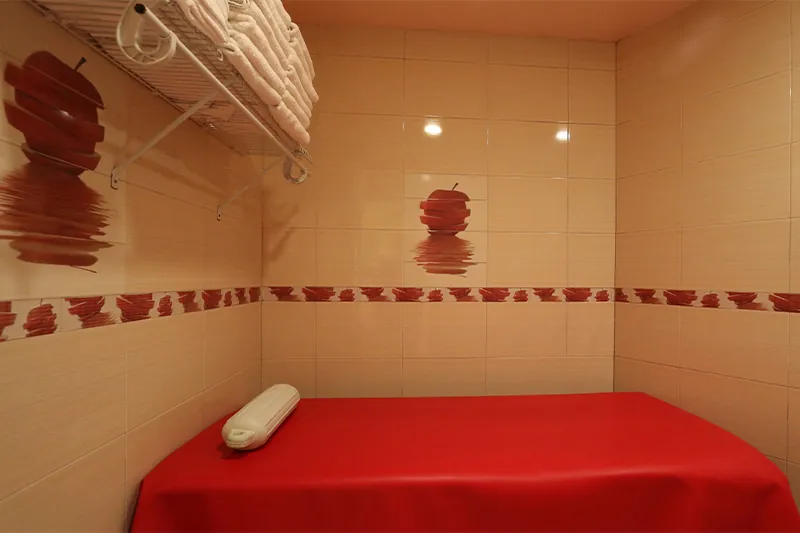
The session runs like a Swedish massage in a private treatment room with a padded table and fresh linens. Here is the order of events so there are no surprises.
- A short conversation. The therapist asks about sore spots, injuries, allergies, skin sensitivity, pregnancy and the pressure you like. This is where you choose the oil.
- A scent test. The therapist opens the bottle so you can smell the blend before it goes on. If you do not like it, pick another.
- Undress to your comfort level and lie under the sheet. Draping covers you throughout; only the area being worked is uncovered.
- The massage itself. Long strokes on the back, shoulders, neck, arms, legs and feet, with the oil warmed in the therapist's hands first. Pressure is light to medium unless you ask for more.
- A few quiet minutes at the end, then water. You rest on the table, dress at your own pace and rehydrate before leaving.
Expect the scent to be noticeable but not heavy. A good aromatherapy blend is subtle enough that the room does not smell like a candle shop. If you want more scent, the therapist can add a drop to a towel near your face rather than increase the amount on your skin.
Risks and who should ask a doctor first
For most healthy adults the risks are small: a possible skin reaction to a specific oil, or a headache from a scent that is too strong. A few groups should check with a doctor before booking.
- Anyone with sensitive skin, eczema or a history of contact allergies. Ask for a small patch of diluted oil on the forearm first, or skip the essential oil and have a plain Swedish massage.
- People with asthma or a strong reaction to scents. Eucalyptus and peppermint in particular can trigger a cough or a headache in some people.
- People with epilepsy. Some sources advise avoiding certain oils, including rosemary and some forms of eucalyptus; ask your neurologist.
- Anyone on blood thinners, or with a recent injury, surgery, clot or open wound. This applies to any massage, not just aromatherapy.
- Children. Most oils are too strong for young skin at adult dilutions, and peppermint and eucalyptus are not recommended for small children at all.
- Anyone with a medical condition, including heart disease, cancer or diabetes. Massage is often fine, but your doctor should say so first.
Citrus oils can make skin more sensitive to sunlight for a day. If your blend includes orange or bergamot, avoid sunbathing right after. Tell the therapist about any medication or condition at the start; the conversation is short and it protects you.
Is aromatherapy massage safe during pregnancy?
Ask your doctor or midwife first, every time. That is the rule for any massage during pregnancy, and it matters more with essential oils because scent sensitivity rises during pregnancy and some oils are traditionally avoided.
Many sources advise skipping essential oils entirely in the first trimester and using only a short list of gentle oils, at a low dilution, after that. Lavender is usually on the gentle list. Peppermint, rosemary, clary sage and several others are commonly avoided. Eucalyptus is debated. Because the lists vary and your situation is your own, we do not decide this for you; your provider does.
If your doctor says yes, tell us when you call so the therapist can plan the position, the pressure and the oil. Many pregnant guests choose an unscented Swedish massage instead and save the aromatherapy for after the baby arrives.
Tips for a better aromatherapy massage
A few small things make the session better. None of them are rules, just what we have seen work over a decade in Palisades Park.
- Pick the oil for the day you are having, not the one you think you should like. Stressed, choose lavender. Stuffy, choose eucalyptus. Sore legs, choose peppermint.
- Arrive without perfume or strong cologne. It competes with the blend.
- Eat lightly beforehand. Lying face down on a full stomach is uncomfortable.
- Shower before, not right after. The oil keeps working on the skin for a few hours, and the scent is part of the point. Shower in the morning.
- Drink water after. It helps with the slight lightheaded feeling some people get from a warm room and a long massage.
- Pair it with the steam sauna if you like heat. Many guests do the sauna first to warm up the muscles, then the massage. Ask when you book, and if heat is the draw, read what a hot stone massage does too.
- Keep the evening quiet. A lavender session at 9 PM followed by a drive home on Route 46 and an early night is the best use of the oil.
If you are choosing between this and a firmer style, how Swedish and deep tissue compare is a good start, but the rule of thumb is simple. Aromatherapy is for relaxing. If you have a specific knot that needs work, deep tissue or sports massage will do more for it, and you can always ask for a drop of oil on the towel for the scent.
Aromatherapy massage at Hana Spa in Palisades Park
Hana Spa is at 520 Bergen Blvd in Palisades Park, NJ, six minutes from Fort Lee and the George Washington Bridge, with free parking on site. We are open every day from 9 AM to 11 PM. Walk ins are welcome, and you can call 201-242-0444 to hold a time. Korean and English are spoken.
Ask for the aromatherapy massage and name your oil, or let the therapist suggest one after the short conversation at the start. It is part of our full list of massage and spa services, all done by licensed therapists in private rooms. Call for pricing.
Questions readers ask
Can I choose more than one oil?
Yes. The therapist can blend two, such as lavender with a little peppermint, as long as the total dilution stays low. Smell the blend before it goes on and change it if you do not like it.
Will the scent stay on my skin afterward?
Lightly, for a few hours. The carrier oil absorbs and the scent fades by the next morning. If you have a meeting right after, ask for a light blend or lavender, which is the most neutral.
Is aromatherapy massage firm enough for sore muscles?
It uses light to medium pressure, so it suits general tension and stress. For a stubborn knot, deep tissue or sports massage goes deeper, and the therapist can still add a drop of oil to a towel for the scent.
Can I get an aromatherapy massage if I have a cold?
If you are mildly stuffy and not feverish, many people pick eucalyptus for exactly that. If you have a fever, body aches or are contagious, wait until you are well, both for your comfort and for the therapist.