Sauna vs Steam Room: Dry Heat, Wet Heat and Which Hana Spa Has
Sauna and steam room get used as if they were the same thing, and in a spa they often sit side by side. They are not the same. One is hot and dry, the other is warm and wet, and the difference changes how the heat feels, how long you can stay, and what it does for your skin, your sinuses and your muscles.
In one line: a sauna is dry heat, usually 150 to 195 degrees Fahrenheit with very low humidity, while a steam room is moist heat, usually 110 to 120 degrees at close to 100 percent humidity. Hana Spa in Palisades Park has a steam sauna, which is the moist heat kind. This guide compares the two in detail, explains what each does to the body, and shows how the steam sauna fits with the massage services we offer.
The short answer: dry heat versus wet heat
A sauna heats the air; a steam room fills the air with water vapor. That single difference explains everything else. In a sauna the air is hot and dry, your sweat evaporates quickly, and you can tolerate a high temperature. In a steam room the air is saturated, sweat cannot evaporate, and a much lower temperature feels just as intense.
Both raise your skin and core temperature, both make you sweat, both increase heart rate and widen blood vessels. The sensation and the side benefits differ. Dry heat tends to feel cleaner and sharper, and is the traditional choice in Finland and in Korean dry rooms. Moist heat feels heavier and softer, is easier on the airways for many people, and leaves skin feeling hydrated rather than parched.
Hana Spa has a steam sauna, the wet heat kind. The rest of this guide covers both so you know what you are getting and how it compares to the dry room you may have used at a gym.

Temperature and humidity compared
The numbers below are typical ranges, not rules. Every room is set differently, and the right session length depends on how you feel inside it, not on the thermometer.
| Feature | Sauna (dry heat) | Steam room (wet heat) |
|---|---|---|
| Air temperature | 150 to 195 degrees F | 110 to 120 degrees F |
| Humidity | 5 to 20 percent | Close to 100 percent |
| Heat source | Stove with heated rocks, electric or wood | Steam generator piping vapor into a sealed room |
| Walls and benches | Wood, usually cedar or spruce | Tile, glass or stone, sealed against moisture |
| How sweat behaves | Evaporates fast, skin feels dry | Stays on the skin, mixes with condensation |
| Typical session | 10 to 20 minutes | 10 to 15 minutes |
| Feels like | Standing near a fire | A hot, foggy bathroom after a long shower |
The temperature gap surprises people. A 115 degree steam room feels every bit as intense as a 180 degree sauna, because your body cannot cool itself by evaporation when the air is already full of water. That is also why steam sessions run a little shorter.
How each room is built
A dry sauna is a wooden box with a stove. The walls, ceiling and benches are untreated softwood, which stays cool enough to sit on and absorbs a little moisture, and the stove heats a pile of rocks that can take a ladle of water for a burst of steam. Benches are tiered because hot air rises, and the top bench can run 20 to 30 degrees hotter than the bottom one.
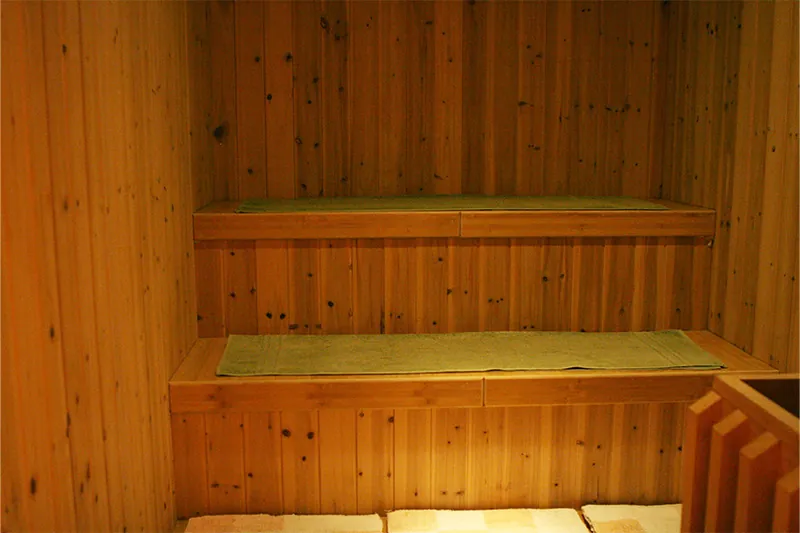
A steam room is sealed. The walls are tile, stone or glass with a sloped ceiling so condensation runs down the walls instead of dripping on you, and a generator outside the room pipes steam in through a vent. There is no stove to pour water on and no tier effect; the room fills evenly. Wood lined steam rooms like the one at Hana Spa use treated wood that tolerates moisture, giving the warmth of a sauna interior with the air of a steam room.
How each feels on the body
Dry heat feels like a hot, bright afternoon: your skin tightens, your nose and throat feel the dryness, and the sweat comes fast and then disappears. Wet heat feels like being wrapped in a warm cloud: your skin is damp within a minute, breathing feels slow and full, and there is no sharp edge to the heat.
In a dry sauna
The first minutes are comfortable. Around minute five, sweat starts and the air near the ceiling feels noticeably hotter than near the floor, so sitting on a lower bench is a real option. Breathing through the nose can feel dry; many people find a damp towel over the face helps. Pouring water on the rocks gives a brief wave of steam that spikes the humidity and the sensation.
In a steam room
The heat arrives immediately because the air is already saturated. Visibility drops as the steam thickens. Your skin runs with a mix of sweat and condensation, and you cannot always tell which is which. The air feels heavy to breathe for the first minute and then easy, which is why people with a stuffy nose often prefer steam. There is no top shelf effect; the whole room is close to the same temperature.
At Hana Spa the steam sauna is wood lined, which softens the look and the feel compared to a tiled gym steam room, while still holding moist heat.
What happens to your heart, lungs, muscles and skin
Both kinds of heat trigger the same basic response: blood vessels near the skin widen, heart rate climbs to something like a brisk walk, and the body sweats to cool down. The differences show up in the lungs and the skin.
Heart and circulation
Heart rate in either room commonly rises to 100 to 150 beats per minute, similar to moderate exercise. Studies suggest regular heat exposure may support cardiovascular health over time, but a single session is not a workout and should not be treated as one. Anyone with a heart condition or blood pressure medication should ask their doctor before using either.
Lungs and sinuses
This is where the two part ways. Warm, moist air thins mucus and many people find it eases a congested nose or a tight chest. Dry air can do the opposite for sensitive airways. For sinus comfort, steam wins. If the stuffiness comes with a fever, read sauna when sick before you go in.
Muscles and joints
Warm tissue is looser tissue. Either room softens stiff muscles and eases joint stiffness for an hour or two, which is why ten minutes of heat before a massage lets the therapist get further with less pressure.
Skin
Sweating in either room opens pores and rinses the surface. Dry heat can leave skin tight; moist heat leaves it soft and hydrated. People with dry or sensitive skin often prefer steam for that reason.
Health benefits compared, with the hedges in place
The honest summary is that both rooms offer similar short term benefits, that steam has an edge for sinuses and skin, that dry heat has the longer research record, and that neither cures anything. The table keeps the claims where the evidence is.
| Benefit | Sauna (dry) | Steam room (wet) | What research suggests |
|---|---|---|---|
| Muscle relaxation | Yes | Yes | Warm tissue loosens; effect lasts an hour or two |
| Congestion relief | Limited | Strong | Moist air thins mucus; many people report easier breathing |
| Skin hydration | Can dry skin | Leaves skin soft | Surface effect; not a treatment for skin conditions |
| Stress and sleep | Yes | Yes | Many people report calmer mood and better sleep that night |
| Circulation | Yes | Yes | Heart rate and blood flow rise during the session |
| Long term heart health | Some evidence | Less studied | Long running Finnish studies on dry sauna suggest benefit with regular use |
| Workout recovery | Yes | Yes | Heat after training may reduce stiffness; feeling better is not full recovery |
Short term versus long term
The short term effects are the ones you can feel: looser muscles, clearer sinuses, softer skin, a calmer mood and often a better night of sleep. These show up after a single session in either room and fade within a day or so.
The long term claims are where the two rooms differ, and where the evidence thins out. Most of the research on regular heat use comes from Finland and looks at dry sauna, because that is what Finns have used for generations. Those studies suggest that people who use the sauna several times a week do better on some heart and circulation measures over the years, though they cannot prove that the sauna is the cause. Steam rooms have far fewer long term studies. The sensible reading is that regular, moderate heat of either kind is probably good for most healthy adults, and that neither room should be treated as a treatment for anything.
None of these should be read as medical advice. If you have a medical condition, or you are pregnant, ask your doctor first before using heat of either kind.
Which is better for what
Pick by what you want from the session. The list below is how our staff answer the question at the front desk.
- Stuffy nose, sinus pressure, dry cough: steam room. The moist air does the work.
- Dry or sensitive skin: steam room. Dry heat can leave skin tight and itchy.
- Loosening up before a massage: either, and the steam sauna at Hana Spa is right there. Ten minutes is enough.
- Deep, intense sweat and the traditional Finnish feel: dry sauna.
- Claustrophobia or dislike of fog: dry sauna, where you can see the room.
- Asthma or reactive airways: many people find steam easier, but ask your doctor; some find any heat a trigger.
- Wind down before sleep: either, as long as you finish 1 to 2 hours before bed so your body temperature can drop.
- Contact lenses, fresh color, or a lot of jewelry: steam is gentler on lenses and hair, but remove metal in either room because it gets hot; what to wear in a sauna covers the rest.
If you only have access to one, use it. The gap between the two is smaller than the gap between using heat regularly and not using it at all. For a longer look at what moist heat does, see benefits of a steam sauna.
Safety, session length and who should ask a doctor first
Both rooms are safe for most healthy adults when sessions are short and you drink water. Both are risky for the same small group of people, and the warning signs to get out are the same.
Session length and frequency
- First visit: 5 to 10 minutes, then out and cool down.
- Regular use: 10 to 15 minutes in steam, 10 to 20 in dry heat.
- Rounds: up to 2 or 3 rounds with a cool shower and water between each.
- Per week: 2 to 3 sessions is common; some people go daily, which studies suggest is fine for healthy adults who hydrate.
- Total heat time: stay under 30 to 40 minutes across a visit.
Get out if
- You feel dizzy, lightheaded or sick
- Your heart is pounding rather than just elevated
- You stop sweating or feel a chill in the heat
- You get a headache that builds
Ask your doctor first if
- You are pregnant
- You have a heart condition, low or high blood pressure, or take medication for either
- You have had a recent illness with fever
- You have a skin infection, open wound or any condition that affects sweating
- You have had alcohol; wait until it has fully cleared, since alcohol plus heat is a common cause of fainting
The companion post how long to stay in a steam sauna goes deeper on timing around a massage.
How to pair the steam sauna with a massage
The best way to use the steam sauna at Hana Spa is before a massage, for about 10 minutes, followed by a short cool down and a glass of water. Warm tissue lets the therapist reach deeper with less pressure, and most people find the massage itself feels better.
A typical visit runs like this:
- Arrive, check in and have the short conversation about sore spots, injuries and pressure.
- 10 minutes in the steam sauna.
- Cool down for 5 to 10 minutes and drink water.
- Massage in a private treatment room on a padded table with fresh linens: Swedish, deep tissue, hot stone or whichever style you chose.
- Rest and rehydrate before you leave.
Using the steam room after a massage works too, especially after deep tissue, since the heat eases the mild soreness that can follow. Keep it short, 10 minutes at most, and drink water. Whichever order you choose, do not stack a long steam session on top of a long massage on an empty stomach; eat something light an hour or two before.
The steam sauna at Hana Spa in Palisades Park
Hana Spa has a wood lined steam sauna, the moist heat kind, alongside 14 services that include Swedish, deep tissue, shiatsu, hot stone, aromatherapy, Thai and sports massage, foot reflexology and cupping. Sessions take place in private treatment rooms with licensed therapists trained in several modalities, and the steam sauna can be combined with any massage. Our guide to the hand reflexology chart explains why we pair hands and feet in one session. The full list is on the services page; pricing is by phone.
Hana Spa is at 520 Bergen Blvd in Palisades Park, NJ, six minutes from Fort Lee and the George Washington Bridge, and open every day from 9 AM to 11 PM. Walk ins are welcome, or call 201-242-0444 to hold a time. Free parking is on site, NJ Transit route 154 runs along Bergen Boulevard and route 166 along Broad Avenue, and Korean and English are spoken at the desk.
Questions readers ask
Which is hotter, a sauna or a steam room?
A sauna is hotter by the thermometer, often 150 to 195 degrees, while a steam room is usually 110 to 120. The steam room feels just as intense because sweat cannot evaporate in saturated air.
Is a steam room better than a sauna for a cold?
For a stuffy nose without fever, many people find moist steam easier on the sinuses than dry heat. With a fever, chills or body aches, skip both and rest.
Can I use the steam sauna and a dry sauna on the same day?
Yes, if you keep each round short, cool down between them, and keep total heat time under 30 to 40 minutes. Hana Spa has a steam sauna; the dry room would be elsewhere.
Does a steam room burn calories?
Your heart rate rises, but most of the weight you lose in a session is water and comes back when you drink. It is not a substitute for exercise.
Should I shower before using a steam room or sauna?
Yes. A quick rinse removes lotion, sweat and deodorant so your skin can sweat freely, and it keeps the room clean for the next person. Rinse again afterward to cool down.