Hand Reflexology Chart: Why We Pair Hands and Feet in One Session
A hand reflexology chart is a drawing of the palm, the fingers and the back of the hand with the body laid over it. The thumb and fingertips stand for the head and neck. The pad under the fingers stands for the chest and shoulders. The center of the palm stands for the organs of the upper belly, and the heel of the hand stands for the lower belly and the pelvis. Reflexologists use the chart to decide where to press and in what order.
Here is the direct answer to what the chart is for: it is a map, not a diagnosis. It tells a trained reflexologist which patch of the hand corresponds to which region of the body in the reflexology tradition, so the whole body can be worked through the hand alone. At Hana Spa in Palisades Park we usually work the hands together with the feet in one session, because the two charts mirror each other and the feet carry the stronger, deeper reflex work. This guide explains how to read the hand chart, how it lines up with the foot chart, and why pairing the two makes sense as part of our massage and spa services.
The short answer: what a hand reflexology chart shows
The chart shows the body folded onto the hand. Head at the top, pelvis at the bottom, spine along the inner edge, and the two hands together making one whole body: the right hand for the right side, the left hand for the left side.
That is the whole logic. Everything else on the chart is detail. Once you can picture a person standing on the palm with their head in the thumb and fingers and their feet at the wrist, you can read almost any chart from any school of reflexology, because they all share that orientation even when they disagree on where exactly a given organ sits.
Reflexology is a tradition, not a proven medical system. Published research on it is mixed: some small studies suggest it helps people relax and feel less anxious, while reviews find little evidence that pressing a point on the hand changes an organ elsewhere. We describe the chart the way reflexologists use it, and we treat the session as a relaxing, careful form of hand and foot massage. If you have a medical condition, or if you are pregnant, ask your doctor before booking any reflexology session.
How to read the chart, region by region
Hold your hand palm up and look at it as a small body. The chart divides it into a handful of regions, each with its own reflex areas. The table below is the common layout used by most hand charts.
| Area of the hand | What the chart maps it to | How it is usually worked |
|---|---|---|
| Tips of the thumb and fingers | Head, brain, sinuses | Small circles with the thumb, 3 to 5 seconds per point |
| Middle joint of each finger | Neck, throat, eyes and ears | Gentle squeeze and roll |
| Pad under the fingers | Chest, lungs, shoulders | Thumb walking across the pad |
| Center of the palm | Stomach, liver, kidneys, adrenals | Slow pressure, held 5 to 10 seconds |
| Heel of the hand near the wrist | Lower belly, pelvis, hips | Broad pressure with the knuckle or thumb |
| Inner edge along the thumb side | Spine, from neck at the top to tailbone at the wrist | Thumb walking down the edge |
| Outer edge along the little finger side | Shoulder, arm, elbow, knee, hip | Thumb walking down the edge |
| Back of the hand | Lymph areas, breast and chest, upper back | Light strokes between the bones |
The palm versus the back of the hand
Most of the chart lives on the palm, where the skin is thick and the tissue can take firm pressure. The back of the hand gets a lighter touch. The skin there is thin, the tendons sit close to the surface, and a reflexologist will stroke along the grooves between the long bones rather than press into them.
Left hand versus right hand
Each hand holds half the body. Organs that sit on one side, like the liver on the right or the heart and spleen on the left, appear only on the matching hand. Organs that sit in the middle, like the stomach and the bladder, straddle both charts along the inner edge. A full hand session always works both hands for this reason.
The five zones that run through the hand
Underneath the organ map is an older and simpler idea called zone theory. It divides the body into ten vertical strips, five on each side, running from the head down through the torso and out to the fingers and toes. Each finger is the end of one zone, and each toe is the end of the same zone. This is the key to why hand and foot charts match.
- Zone 1 runs from the thumb up the inner arm, through the center of the body and down to the big toe. It carries the spine, the nose and the midline organs.
- Zone 2 runs from the index finger to the second toe and covers the area just off center, including the eyes.
- Zone 3 runs from the middle finger to the third toe and passes through the middle of each lung and the middle of the belly.
- Zone 4 runs from the ring finger to the fourth toe and takes in the outer chest and the outer belly.
- Zone 5 runs from the little finger down the outer edge of the body to the little toe, carrying the shoulder, the outer arm, the hip and the outer leg.
In practice a reflexologist does not treat the zones as separate lines. They are a way to think about the whole hand at once: pressure on the thumb is said to affect everything in Zone 1, pressure on the little finger everything in Zone 5. When you see a chart that looks crowded with organ names, picture the five strips underneath and it becomes easier to follow.
Hand chart versus foot chart: why they mirror each other
The hand chart and the foot chart are the same map drawn on two different surfaces. Put a hand and a foot side by side, thumb next to big toe, and the layout lines up: head in the digits, spine along the inner edge, chest under the digits, belly in the middle, pelvis at the heel.
The differences are in size and depth. The foot is larger, so each reflex area on the foot chart is bigger and easier to find. The sole is also thicker and better padded than the palm, which means a reflexologist can press harder and hold longer on the foot without discomfort. For both reasons the foot is the main surface in most sessions, and the hand is the companion. Our foot reflexology chart guide walks through the foot layout in the same detail.
Where the hand has the edge is reach and convenience. You can work your own hands at your desk, in a car or on the bus. You cannot easily work your own feet during a workday. And some people cannot have their feet worked at all for a while, after a foot injury, a sprain or a skin problem, which makes the hand the only option until the foot heals.
| Feature | Hand chart | Foot chart |
|---|---|---|
| Size of each reflex area | Small, close together | Larger, easier to isolate |
| Pressure the tissue accepts | Light to medium | Medium to firm |
| Easy to work on yourself | Yes, anywhere | Only when seated with time |
| Role in a spa session | Companion, 10 to 15 minutes | Main work, 30 minutes or more |
| Useful when the other is injured | Yes | Yes |
Why we pair hands and feet in one session
We pair them because the two charts cover the same body, and working both lets the therapist go over every region twice from two directions. The feet get the deep, unhurried work. The hands get a lighter pass that reaches the same zones and closes the session with something you can feel immediately, since you use your hands all day.
There is a practical reason too. Many people who come to Hana Spa for reflexology spend the day typing, driving, cooking, cutting hair or lifting. Their hands are as tired as their feet. A session that stops at the ankles leaves the most used part of the body untouched. Our hand and foot reflexology combo was built for that: the standard foot session, then the hands, in one appointment with one therapist.
What the hands add to a foot session
The hands bring three things. First, the forearm and wrist get attention, because the therapist works up from the hand into the muscles that control it. Anyone with tight forearms from a keyboard or a steering wheel notices this right away. Second, the hand work is done sitting or lying comfortably, so it acts as a slow finish that lets your heart rate settle before you stand up. Third, the therapist can teach you two or three points to press on your own hand between visits, which is not possible with the foot.
What the feet add to a hand session
The feet bring depth and time. Thirty minutes on the feet, with the thicker sole and the bigger reflex areas, is where most people feel the full effect of reflexology. The hands alone are a good short session; the two together are a complete one.
What a hand and foot reflexology session looks like
The session is clothed, seated or reclined, and starts and ends the same way every other session at Hana Spa does: with a short conversation and then time to rest. You roll up your sleeves and remove your shoes and socks. Nothing else comes off.
- Arrival and a short conversation. The therapist asks about sore spots, old injuries, recent surgery, pregnancy and the pressure you like. Tell them about anything on your hands or feet, including cuts, warts, athlete's foot or a healing sprain, so they can work around it.
- Foot soak or warm towel. Your feet are warmed and cleaned before any pressure. If you like heat before a session, our guide to sauna versus steam room explains which kind Hana Spa has.
- Foot reflexology, both feet. The therapist works the whole foot chart, usually starting with the toes and ending at the heel, then repeats on the other foot. Expect about 30 minutes.
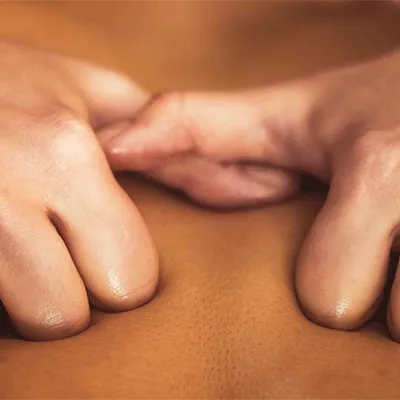
- Hand reflexology, both hands. Thumb walking across the palm, each finger, the edges and the back of the hand, then the wrist and forearm. Expect 10 to 15 minutes.
- Rest and water. You stay seated for a few minutes and drink a glass of water before you leave.
Pressure is yours to set. Reflexology should feel firm and specific, sometimes tender on a particular point, never sharp. If a point hurts, say so, and the therapist eases off or moves on. Korean and English are spoken, so there is no barrier to saying it.
Who hand reflexology suits
It suits anyone whose hands work hard, anyone who cannot have their feet worked right now, and anyone who wants a short, clothed session that fits into a lunch hour or a quick stop on the way home from the George Washington Bridge.
Desk workers and phone users
Hours of typing and scrolling tighten the thumb, the base of the palm and the forearm. The reflexologist's thumb walking across the palm and up the forearm is, in plain terms, a thorough hand massage. Many people find it eases the ache in the thumb and wrist that builds up over a workweek. It is not a treatment for carpal tunnel or arthritis; if you have either, ask your doctor first and tell the therapist.
Drivers, cooks, stylists and tradespeople
Grip work leaves the forearm flexors tight and the fingers stiff. Hand reflexology spends real time on the fingers one by one, which few other treatments do.
People who cannot have foot work
A sprained ankle, a fresh pedicure, a plantar wart, a fungal infection or a healing fracture all put the foot off limits for a while. The hand carries the same map, so the session can still happen. Tell us when you call and we will plan a hands only session.
People who are ticklish or nervous about their feet
Some people simply do not want their feet touched. Hands are an easy entry point. Many start with the hands, get used to the feel of reflexology, and move to the combo on the next visit.
Simple hand points to try between visits
You can use the chart on yourself in a few minutes a day. The goal is comfort, not treatment. Press firmly but never to the point of pain, breathe slowly, and stop if anything feels wrong. Skip this if you have an injury, swelling or an open cut on the hand.
- Web of the thumb. Pinch the fleshy web between thumb and index finger with the opposite thumb and finger. Hold for 10 to 15 seconds, then release. On most charts this sits in Zone 1 near the head and neck area, and many people find it calming.
- Center of the palm. Press the middle of the palm with the opposite thumb in slow circles for 30 seconds. This is the stomach and solar plexus area on the chart and is the point most reflexologists use to settle someone down.
- Base of each finger. Squeeze the pad under each finger for 5 seconds, moving from the index finger to the little finger. This is the chest and shoulder band on the chart.
- Inner edge of the hand. Walk the opposite thumb down the thumb side of the hand from the base of the thumb to the wrist. This is the spine line. Go slowly, 1 to 2 minutes per hand.
- Finish by shaking out both hands and drinking a glass of water.
Five minutes a day on each hand is plenty. None of this replaces a session with a trained therapist, but it keeps the hands loose between visits and gives you a feel for the map before you come in.
Hand and foot reflexology at Hana Spa in Palisades Park
Hana Spa is at 520 Bergen Blvd in Palisades Park, NJ, six minutes from Fort Lee and the George Washington Bridge, with free parking on site. We are open every day from 9 AM to 11 PM. Walk ins are welcome, and you can call 201-242-0444 to hold a time. Korean and English are spoken.
Ask for the hand and foot reflexology combo if you want the full session described above, or foot reflexology on its own if you want the feet only. Both are listed with the rest of our massage and spa services, and each is done in a private treatment room by a licensed therapist. Call for pricing and for any questions about pairing reflexology with a full body massage.
Questions readers ask
Is a hand reflexology chart the same as a foot reflexology chart?
They show the same map on different surfaces. Head in the digits, spine along the inner edge, pelvis at the heel. The foot chart is larger and easier to work, which is why the feet take most of a session and the hands finish it.
Can I have hand reflexology without the foot work?
Yes. A hands only session is a good choice if your feet are injured, if you are ticklish, or if you are short on time. Tell us when you call and we will plan the session around the hands and forearms.
Does hand reflexology help carpal tunnel or arthritis?
It is not a treatment for either. Many people with tired, tight hands find the session relaxing and find it eases everyday stiffness, but if you have a diagnosed condition ask your doctor first and tell the therapist before the session starts.
How long is the hand portion of the combo?
Usually 10 to 15 minutes after about 30 minutes on the feet, so the hand and foot combo is around 45 minutes in total. Call for exact session options and pricing.