Finnish Sauna: Temperature, Calories and How to Use One
A Finnish sauna is a wood lined room heated by a stove to dry, high heat, and it is the style most people picture when they hear the word sauna. If you are reading about the Finnish sauna before you try one, you probably want the practical parts: how hot it gets, what it really does for your body, and how to use it without ending up dizzy.
The short answer: a traditional Finnish sauna runs roughly 160 to 195 degrees Fahrenheit with low humidity, you sit for a few short rounds with cool breaks in between, and most of the weight you lose is water. At Hana Spa in Palisades Park we have a steam sauna rather than a Finnish dry sauna, so this guide explains the Finnish style in general and then tells you plainly what we offer instead.
What is a Finnish sauna?
A Finnish sauna is a small room lined with wood, heated by an electric or wood burning stove with a pile of stones on top, and set up with benches at different heights. The heat is dry. Humidity usually sits low, and it jumps for a moment when someone ladles water onto the hot stones.
That burst of steam has its own name in Finland, löyly. It is not meant to turn the room into a steam bath. It softens the dry air for a minute so the heat feels rounder on your skin and in your nose and throat, then the humidity drops again.
In Finland the sauna is part of ordinary life rather than a luxury. Families use one at home, apartment buildings share one, and people go in for a few rounds, cool off, and go back. The routine is slow on purpose. Nobody is racing the clock, and nobody is expected to tough it out.
The parts of the room
- The stove and stones: they hold heat and give off the dry warmth that defines the style.
- Tiered benches: heat rises, so the top bench is the hottest and the lowest bench is the gentlest.
- Wood walls and benches: wood stays comfortable to sit on, which is why you do not find tile or metal seats in a traditional room.
Sauna temperature: what the numbers mean
Most Finnish style saunas run between about 160 and 195 degrees Fahrenheit, and many settle near 175. The thermometer is usually mounted fairly high on the wall, so the reading tells you about the top bench, not the one you are sitting on.
Temperature only tells half the story. Humidity decides how hot the room feels. Dry air lets sweat evaporate off your skin, which is why you can sit in air hotter than a hot summer day without feeling scalded. Wet air shuts that cooling system down, so steam rooms feel intense at far lower numbers.
| Room type | Typical air temperature | Humidity | How it feels |
|---|---|---|---|
| Finnish sauna | About 160 to 195 degrees F | Low, with short bursts from water on the stones | Dry and deep, you sweat steadily |
| Steam room or steam sauna | About 110 to 120 degrees F | Close to 100 percent | Heavy, damp and soft on the skin and airways |
Those are general ranges, and every room is a little different. If a room feels harsh to you, believe your body over the thermometer.
How hot should a sauna be for you?
Hot enough that you sweat comfortably and breathe easily, and no hotter. If you feel dizzy, nauseous, or your heart is pounding, the room is too hot for you today, whatever the number says.
First timers do best on the lowest bench, where the air is cooler, and in shorter rounds. Heat tolerance also changes with the day. You may handle a hot room after a cold walk in January and struggle with the same room after a long drive, a skipped lunch, or a glass of wine.
Some people should check with a doctor before using any hot room: anyone who is pregnant, has a heart or blood pressure condition, takes medication that affects blood pressure or sweating, or has been told to avoid heat. That is ordinary caution, not a reason to be nervous.
For session length, our separate notes on how long to sit in a sauna give a round by round plan, and how long to stay before or after a massage covers the pairing with bodywork.
Does a sauna burn calories?
A little, but not much. Your heart rate rises in a hot room and your body works to cool itself, so you burn somewhat more than you would sitting in a cool chair. Published research suggests the effect is modest, closer to light activity than to a workout.
Treat any chart that promises hundreds of calories in a short session with suspicion. Those numbers usually confuse calories with water loss, and the two are not the same thing. Sweat leaves your body as water and a little salt. It does not carry fat out with it.
The honest way to think about it: a sauna is not an exercise substitute. It is a place to slow down, loosen up and let your nervous system settle. If you want energy burned, walk, lift or swim, then use the sauna afterward as your reward.
Does a sauna burn fat?
No, not in any way that shows up beyond a day or two. The weight you see drop on the scale after a sauna is water, and it comes back as soon as you drink.
Fat loss comes from eating less energy than you use over weeks and months. Heat does not melt fat from the belly or hips, and sweating in one area does not target that area. Anyone who sells a sauna as a fat burner is selling a story.
What a sauna can honestly offer is good for fitness in other ways. Many people find it helps them unwind after training, sleep more easily, and feel looser the next morning. Those are real comforts, and they are worth having without the weight loss claim attached.
One thing to watch is dehydration. If you step on a scale right after a session and chase that number, you can end up skipping water you need. Drink first, and let the number go.
How to use a sauna, step by step
Use a sauna in short rounds with cool breaks, drink water before and after, and leave the moment you feel unwell. Here is a simple routine that suits most healthy adults.
- Drink water first. Have a glass before you go in, and do not arrive hungry or after alcohol.
- Shower and dress sensibly. A quick rinse is considered polite and helps you sweat evenly. Our notes on what to wear in a sauna cover towels, swimsuits and the rest.
- Sit on a towel, on a low bench. Move higher only if you feel fine.
- Stay for a short round. Five to ten minutes is plenty at first. Longer is not better.
- Cool down properly. Step out, sit, breathe and let your heart rate come down. A cool shower or a walk in fresh air works well.
- Repeat once or twice. Two or three rounds in total is a full session for most people.
- Rehydrate and rest. Drink water, sit quietly for a while, and skip hard exercise right away.
When to leave right away
Dizziness, a pounding heartbeat, nausea, a headache that builds, or chills mean the session is over. Get out, cool down and sit with water. If symptoms do not ease, get medical help.
After the sauna
Your skin is warm and open, which makes it a good moment for a gentle scrub. If that appeals, our guide to the Korean body scrub explains what it does and how to use one at home.
Finnish sauna versus the steam sauna at Hana Spa
Hana Spa has a steam sauna, not a Finnish dry sauna. The difference is wet heat at a lower temperature rather than dry heat at a higher one, and many guests find the steam gentler on the lungs and the skin.
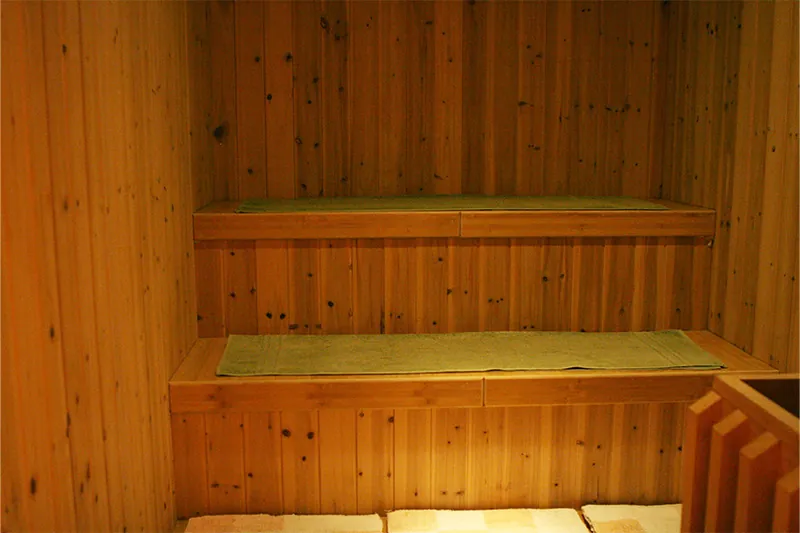
If you love the Finnish style, the steam sauna will feel different, softer and closer. If you have never liked dry heat because it parches your nose and throat, steam may suit you better. Our notes on the benefits of a steam sauna go through skin, sinuses and sleep, and you can read how our steam sauna works for the room itself.
Pairing heat with bodywork
Guests often use the sauna before or after a massage, because warm muscles loosen more easily and the quiet time afterward helps. Some also ask about cupping alongside heat. It is a traditional therapy with a mixed evidence record, and we wrote an honest look at whether cupping therapy works if you want to decide with the facts in hand. You can also browse everything on the full services list.
Visit Hana Spa in Palisades Park
If a warm, quiet room sounds right, come see us at Hana Spa, 520 Bergen Blvd, Palisades Park, NJ 07650. We are open every day from 9 AM to 11 PM, walk ins are welcome, and you can call 201-242-0444 to hold a time. Parking on site is free, and we are six minutes from Fort Lee and the George Washington Bridge.
Read more about the steam sauna and ask the front desk how it fits with a massage. When you are ready, book a time online or phone us. Pricing is by phone, and Korean and English are both spoken.
Questions readers ask
Is a Finnish sauna the same as a dry sauna?
Mostly yes. A Finnish sauna is a dry heat room, and the only moisture comes from the water you splash on the stones. Other styles, such as steam rooms, run much wetter and cooler.
Should I sit on the top bench or the bottom bench?
Start on the lowest bench, where the air is cooler. Heat rises, so the top bench can feel far hotter than the thermometer suggests. Move up only when you feel comfortable.
Is it safe to use a sauna every day?
Many healthy people in Finland do, but it depends on your health and how you feel. If you have a heart, blood pressure or pregnancy concern, ask your doctor before making it a daily habit.
Can I drink alcohol before or after a sauna?
It is best not to. Alcohol and heat together can make you dizzy and dehydrated. Water is the better choice, before and afterward.
Does a sauna help sore muscles?
Many people feel looser after one, and the heat may ease the stiffness that follows hard training. It is not a cure for an injury, so see a professional for pain that does not go away.